https://www.youtube.com/watch?v=sJX9fzjuoO4&t=26s

The Nagoya Protocol on Access to Genetic Resources and the Fair and Equitable Sharing of Benefits Arising from their Utilization to the Convention on Biological Diversity was developed to realize the 3rd Objective of the UN Convention on Biological Diversity – the fair and equitable sharing of the benefits arising out of the utilization of genetic resources. The Nagoya Protocol is a flexible instrument allowing each country to choose for its national legislation the most appropriate option of a legal framework.

Alongside, there are a number of terms to be complied by the country-Parties to the Nagoya Protocol during the transfer of genetic resources (genetic material of plant, animal, microbial or other origin, containing functional units of heredity and of an actual or potential value):

Grant and obtain access based on the prior informed consent (PIC) of the Party providing genetic resources issued by the Competent National Authority (CNA).

Conclude mutually agreed terms (MAT) for the fair and equitable sharing of benefits arising from the utilization of provided genetic resources, as well as their subsequent use and commercialization, between the provider and user countries in the form of special provisions in the collaboration agreement.

Ensure that, at the moment of access, the Competent National Authority of the provider country issues a permit or an equivalent document as a form of evidence of the decision made to grant PIC and conclude MAT.

Inform the ABS Clearing-House for the Convention on Biological Diversity about the transfer of genetic resources by entering the related information to the Database.
Nagoya Protocol Glossary

5 July 2018
Transfer of Belarusian diploid potato lines to K.A. Timiryazev Institute of Plant Physiology of the Russian Academy of Sciences

The Institute of Genetics and Cytology, NAS of Belarus, has transferred the genetic material (tubers) of Belarusian diploid potato lines to the Federal State Budgetary Scientific Institution “K.A. Timiryazev Institute of Plant Physiology of the Russian Academy of Sciences” for non-commercial use (scientific research).

Подробнее
4 July 2018
Traditional Knowledge & Nagoya Protocol

Anna Mezenko “ Traditional Knowledge and Information Potential of Belarusian Toponymicon” Alena Lyashkevich “Implementation of the Nagoya Protocol and Issues Related to Author Rights in the Area of Ethnography” Published Articles in Russian and Belarusian https://abs.igc.by/wp-content/uploads/2020/02/Tradicionnye-znanija-i-Nagojskij-protokol.pdf

Подробнее
25 April 2018
The Institute of Genetics and Cytology of the National Academy of Sciences of Belarus transferred to the Institute of Biology – a separate division of the federal state budgetary division of science of the Federal Research Center “Karelian Scientific Center of the Russian Academy of Sciences” – grains of spring soft wheat.

Акт приема-передачи генетический ресурсов Минприроды – разрешение Договор о передаче генетических ресурсов Договор о передаче генетических ресурсов IRCC – RUSSIA-Inst Plant Physiology -potato – absch-ircc-by-241239-1-en

Подробнее
25 April 2018
TRANSFER OF BELARUSIAN POTATO LINES TO THE K.A. TIMIRYAZEV INSTITUTE OF PLANT PHYSIOLOGY OF THE RUSSIAN ACADEMY OF SCIENCES

Confirmation of compliance with the Nagoya Protocol Signed Agreement IRCC. Tubers of Belarusian diploid potato lines

Подробнее
20 February 2018
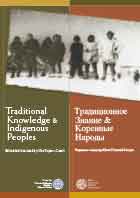
TRADITIONAL KNOWLEDGE & INDIGENOUS PEOPLES. Bilingual English-Russian publication.

Traditional knowledge is an important element of the intellectual and cultural heritage of
indigenous peoples. It reflects their social and historical identity and significantly contributes
to the future well-being and sustainable development of these peoples.
In 2007, the L’auravetl’an Information & Education Network of Indigenous Peoples
(LIENIP) organized a series of educational conferences, aimed at fostering greater
understanding on the nature and evolution of this phenomenon and encouraging mutuallybeneficial relationships among representatives of indigenous communities, academia,
professional entities and international organizations.

Подробнее