

ACHIEVEMENT OF SDG 15 DISCUSSED AT A CONFERENCE
IN VOLOZHIN DISTRICT
On May 22, 2026, the Conference “Contribution of the Republic of Belarus to the 2030 Agenda Implementation and the Achievement of Sustainable Development Goal 15”, dedicated to the International Day for Biological Diversity, was held in Volozhin district.
Maxim Lysenko, First Deputy Minister of Natural Resources and Environmental Protection of the Republic of Belarus, delivered a welcoming speech to Conference participants, expressing gratitude to the United Nations Development Program (UNDP) in the Republic of Belarus, the Embassy of the Russian Federation, and other partners for their partnership in hosting the Conference. The Minister also noted the symbolism of its holding on the International Day for Biological Diversity. Maxim Lysenko stressed the importance of preserving biological and landscape diversity as a key element of country’s sustainable development, noting Belarus’ significant progress in achieving SDG 15. Maxim Lysenko stressed country’s active participation in the implementation of the Convention on Biological Diversity and the importance of the adopted Strategy and National Action Plan for the Conservation and Sustainable Use of Biodiversity of the Republic of Belarus for 2026-2030 for achieving SDG 15.
In his welcoming speech, Vitaly Bychkovsky, Chairperson of the Volozhin District Executive Committee informed about the current challenges faced by Volozhin district in the field of conservation of natural territories, emphasizing that the proximity of large cities and the high popularity of kayaking routes create a significant recreational burden on ecosystems, forming local “mini-disasters”. At the same time, he assured that district authorities continue to consistently seek a balance between the development of tourism and nature protection, promoting cycling routes, eco-trails and planning the creation of a large presentation center on the basis of Volozhin forestry.
Zhanna Cherniavskaya, Chairperson of the Standing Committee on Ecology and Nature Management of the House of Representatives of the National Assembly of the Republic of Belarus, made a welcoming speech, emphasizing the contribution of the Standing Commission to the promotion of legislative initiatives aimed at protecting the subsoil, water resources, forests, as well as wildlife. She noted that due to the systematic work of the state, more than 300 species of plants and 200 species of animals included in the Red Book of Belarus are currently under protection and many of them are of international environmental significance. She emphasized the priority of preserving biological and landscape diversity, noting that this work requires a long-term strategic approach and joint efforts of government, science and society, which became the key basis of the Conference. Zhanna Cherniavskaya noted that Belarus demonstrates consistent steps and concrete results and stressed the importance of similar efforts being undertaken by all countries, since conservation of biodiversity is a common global task.
Andrei Karas, First Deputy Minister of Forestry of the Republic of Belarus, delivered a welcoming speech, noting the historical significance of Nalibokskaya Pushcha as one of the largest forests in Europe and a place where traditions of conservation had been formed over the centuries. He stressed that it was there that approaches to nature conservation had been consistently developing since the 15th century, from the first protected areas of the time of Prince Vytautas to modern projects for the conservation of biodiversity. Andrey Karas also noted that the Naliboksky Republican Landscape Reserve is one of the leading sites of the Ministry of Forestry of the Republic of Belarus in the field of ecological tourism and demonstrates successful practices in combining environmental protection and sustainable use of natural resources.
Tatiana Zheleznova, Head of the Biological and Landscape Diversity Department at the Ministry of Natural Resources and Environmental Protection of the Republic of Belarus, made a presentation on improving State policy in the field of conservation and sustainable use of biological diversity as a contribution of the Republic of Belarus to the implementation of the 2030 Agenda. She noted that the International Day for Biological Diversity, held in 2026 under the slogan “Acting locally for global impact,” highlights the need for specific initiatives on the spot. Tatyana Zheleznova also presented the key elements of the national nature protection system: a well-developed legislative framework, a network of specially protected natural areas, mechanisms for the conservation of rare species and the fight against invasive wild animals and wild plants. She stressed that Belarus is demonstrating significant progress in achieving SDG 15, which is confirmed by the increased area of specially protected natural areas, the updating of the Red Book and the improvement of the position of the Republic of Belarus in international indices in the field of biodiversity. Special attention in her speech was drawn to new Strategies and the National Action Plan for the Conservation and Sustainable Use of Biological Diversity for 2026-2030, prepared with full UNDP support, defining priorities and measures for the coming years in this area.
Mikhail Maksimenkov, a Research Scientist of the Sector of International Cooperation and Support for Environmental Conventions of the Scientific and Practical Center for Bioresources, NAS of Belarus, informed about the new version of the Strategy for the Conservation and Sustainable Use of Biological Diversity as a national instrument for the implementation of the Kunming-Montreal Global Biodiversity Framework and the implementation of SDG 15. He noted that the document sets out six key goals, including the prevention of species decline, the sustainable use of biodiversity, the development of genetic banks, biosafety, the maintenance of reproductive capabilities of the biosphere and the equitable use of genetic resources. He paid special attention to the tasks directly related to the implementation of SDG 15: the development of a system for specially protected natural areas, the restoration of degraded ecosystems, the fight against invasive species, the conservation of rare species and access to genetic resources. In addition, Mikhail Maksimenkov presented the publication “Biological Diversity of Belarus: Status, Protection, Sustainable Use”, prepared based on the results of the presentation of the Seventh National Report on the Implementation of the Convention on Biological Diversity by the Republic of Belarus.
Irina Giginyak, a Senior Research Scientist of the Sector of International Cooperation and Support for Environmental Conventions of the Scientific and Practical Center for Bioresources, NAS of Belarus, informed about the main provisions of the Seventh National Report on the Implementation of the Convention on Biological Diversity by the Republic of Belarus as a contribution to SDG 15. She presented key results for the period after 2019 in such areas as the development of the national ecological network, restoration of disturbed ecosystems, the extended system for specially protected natural areas, protection of rare species, work of genetic banks, invasive species control, sustainable use of forest and hunting resources, as well as improvement of mechanisms regulating access to genetic resources and biosafety. She noted that Belarus is demonstrating steady progress on most of the national tasks related to SDG 15: some of them are being implemented at a faster pace, including ecosystem restoration and the integration of biodiversity issues into government programs. Irina Giginyak emphasized the systemic nature of Belarus’ environmental policy, interagency cooperation and strategic planning, ensuring the fulfillment of country’s international obligations.
Olga Malysheva’s Presentation on Genetic Resources
Olga Malysheva, Head of the National Coordination Centre on Access to Genetic Resources and Benefit-Sharing, informed about the legal framework for genetic resources management as a contribution to the conservation of biodiversity and sustainable development of the Republic of Belarus.
Olga emphasized the strategic importance of genetic resources for food security, medicine, breeding, biotechnology, and climate resilience. She presented the national system of depositories and biobanks, brought into view the key provisions of the Law of the Republic of Belarus “On Genetic Resources Management” regulating access, international registration, monitoring of use and benefit-sharing.
Olga Malysheva emphasized that comprehensive legal regulation of genetic resources management plays a key role in preserving the national gene pool, preventing biopiracy, developing scientific research and supporting environmental protection measures.
According to her, the system developed in Belarus ensures transparent access to genetic resources, effective monitoring of their use and fair benefit-sharing.
Nadezhda Drobot, a Research Scientist of the National Coordination Biosafety Center, informed about the implementation of Task 17 on biosafety in the Republic of Belarus of the Kunming-Montreal Global Biodiversity Framework in the Context of Sustainable Development. She noted Belarus’ efforts in this area, including the preparation of regulatory and technical documents, the improvement of laboratory control of genetically engineered organisms, and the participation of Belarusian specialists in the development of international biosafety guidelines. Nadezhda Drobot paid considerable attention to international cooperation: training specialists from Central Asian countries, participating in the BioMost project, preparing comparative reviews of legislation and methods, as well as conducting regional training courses on GMOs detection and the analysis of environmental DNA. Nadezhda Drobot highlighted Belarus’ contribution to global processes, including the preparation of national reports on the Cartagena Protocol and participation in the development of a Thematic Action Plan on Synthetic Biology, which will be presented to Parties to the Convention on Biological Diversity.
Volha Chabrouskaya, UNDP Programme Analyst, informed about the contribution of UNDP and key areas of cooperation. She noted the transition from individual environmental initiatives to integrated results, including the development of strategic climate documents, the elaboration of an MRV system, the development of energy efficiency and climate education. She focused attention of Conference participants on preventing land degradation and restoring peatlands — more than 50,000 hectares have been restored with UNDP support, and the Belarusian experience is recognized as the best in Europe and Asia. In the field of biodiversity, assistance was provided in the preparation of a new National Strategy and Action Plan, expansion of the network of specially protected natural areas, conservation of rare species, etc. She informed that in 2020-2025, UNDP implemented 11 projects in the Republic of Belarus worth more than 15 million US dollars, providing environmental, social and economic benefits and ensuring the country’s contribution to achieving SDG 15.
The ceremony of awarding honorary diplomas of the Ministry of Natural Resources and Environmental Protection of the Republic of Belarus also took place within the framework of the Conference. Awarded for a significant contribution to the conservation of biological and landscape diversity and achievement of the Sustainable Development Goals: United Nations Development Programme in the Republic of Belarus; Zhanna Chernyavskaya, Chairperson of the Standing Committee on Ecology and Nature Management of the House of Representatives of the National Assembly of the Republic of Belarus; Irina Giginyak, Senior Research Scientist of the Sector of International Cooperation and Support for Environmental Conventions of the Scientific and Practical Center for Bioresources, NAS of Belarus.
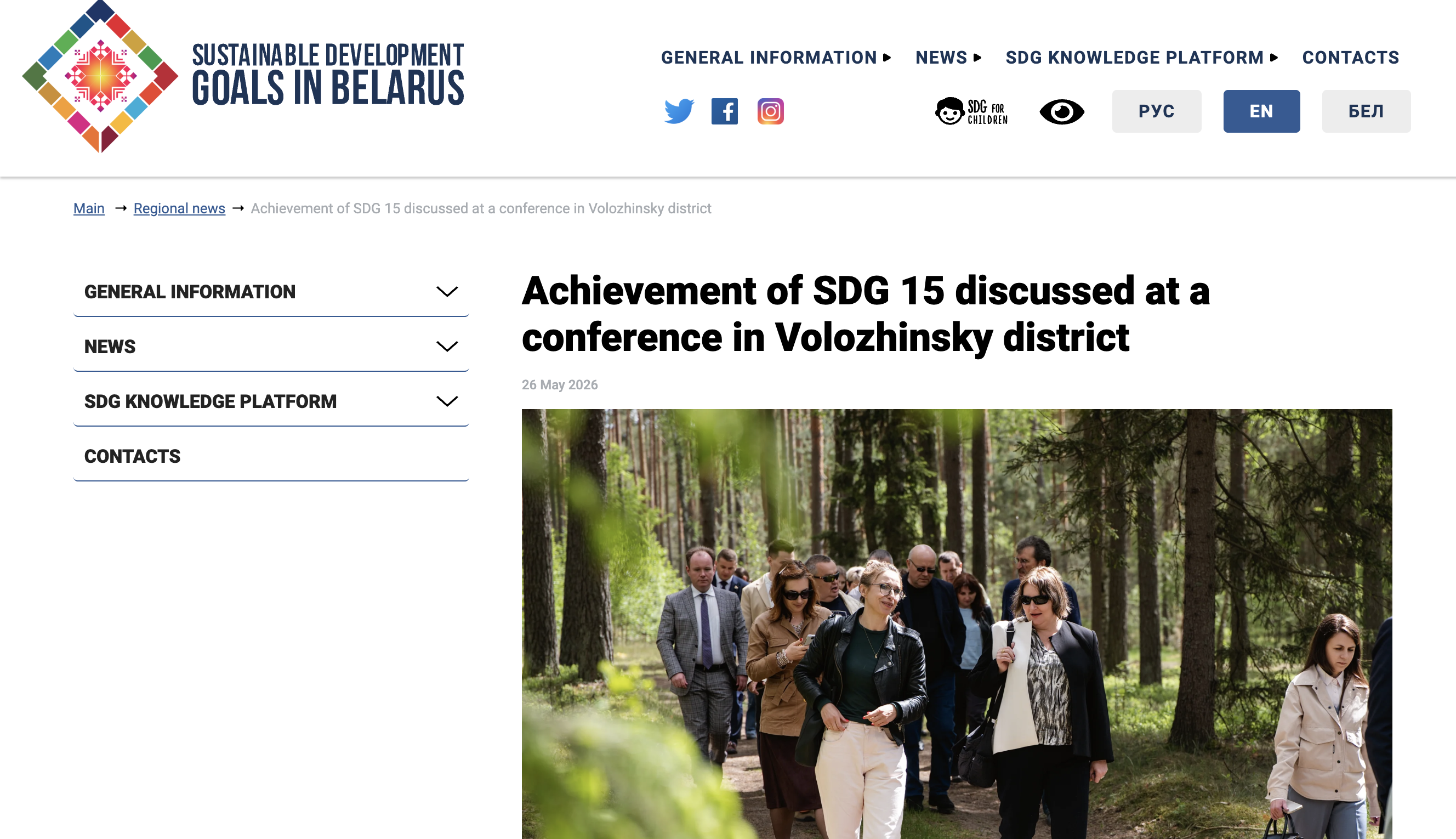
In addition, the Conference participants visited the Naliboksky Republican Landscape Reserve. During the visit to the ecological tourism facilities of the Reserve, Alexander Kozorez, Head of the Hunting Department of the Ministry of Forestry of the Republic of Belarus, presented information on the implementation of the tarpanoid horse resettlement program. Sergey Tumel, Deputy Director of the Republican Naliboksky Landscape Reserve, informed the participants about the development of ecological tourism within the framework of the project “Development of Ecological Tourism to Promote a Green Transition to Inclusive and Sustainable growth”, implemented by the UNDP with the financial support of the Russian Federation.
Original source of news: Achievement of SDG 15 discussed at a conference in Volozhinsky district