

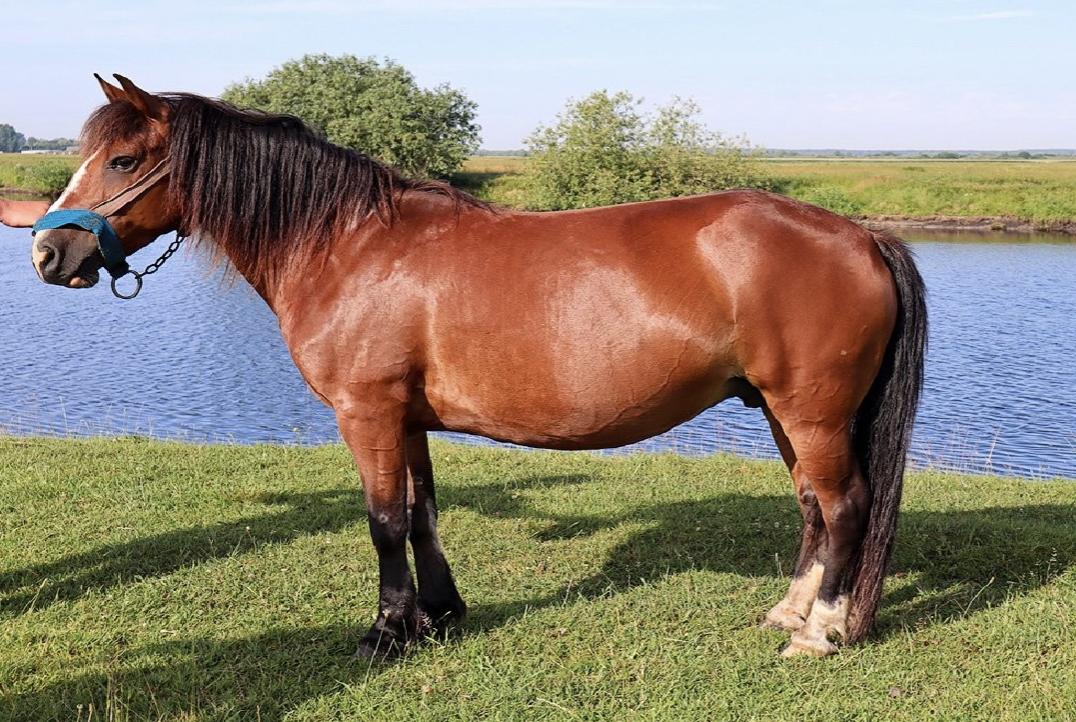
The first article with this title was published on the Wild Nature portal nearly 10 years ago. A lot of water has flowed under the bridge since then, a great deal has been done, but unfortunately one must admit that little has really changed. In fact, things have even gone backwards… Yet, wiser with experience and supported by new activists, we press on.
So, in Belarus in 2020 — the year marking the 20th anniversary of the Belarusian draft horse breed — an initiative group for the preservation of local horse breeds resumed its work. It consists of professionals from the equestrian and scientific fields: zootechnical engineers, biologists, and geneticists. The group operates on a voluntary basis and represents a cooperative of specialists from different sectors — public, private, and civil society.
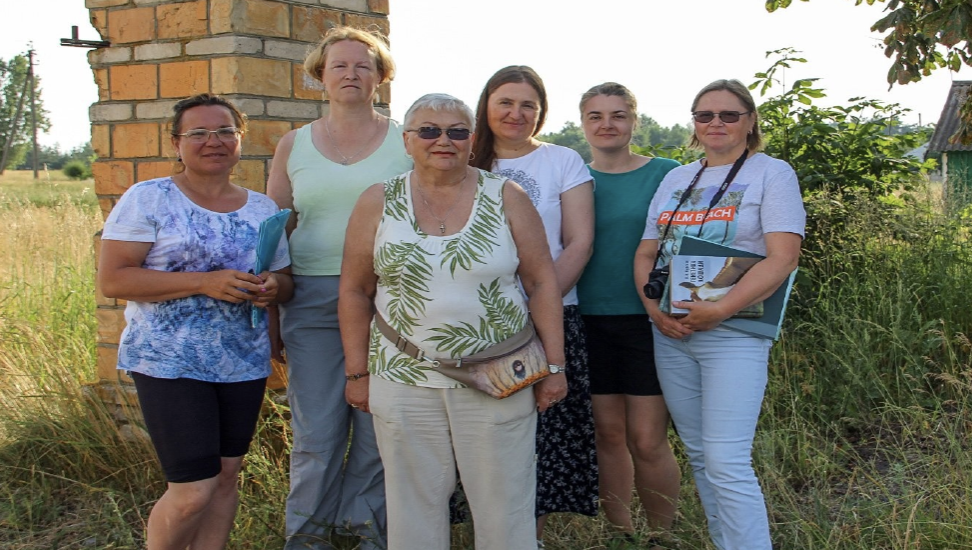
In May of this year, the institution for the promotion of sustainable territorial development principles “Workshop of Green Technologies” was registered. It defined its core mission for the coming years as follows — the development of horse breeding and the preservation of local horse breeds in Belarus through the unification and joint activities of the professional equestrian community, horse enthusiasts, and horse-related organisations. Members of the initiative group and other specialists will soon join the institution’s expert council.
A Bit of Theory and History
In Belarus there are only two groups of horses that can be considered local. These are the Polesian aboriginal population and the Belarusian draft horse breed.
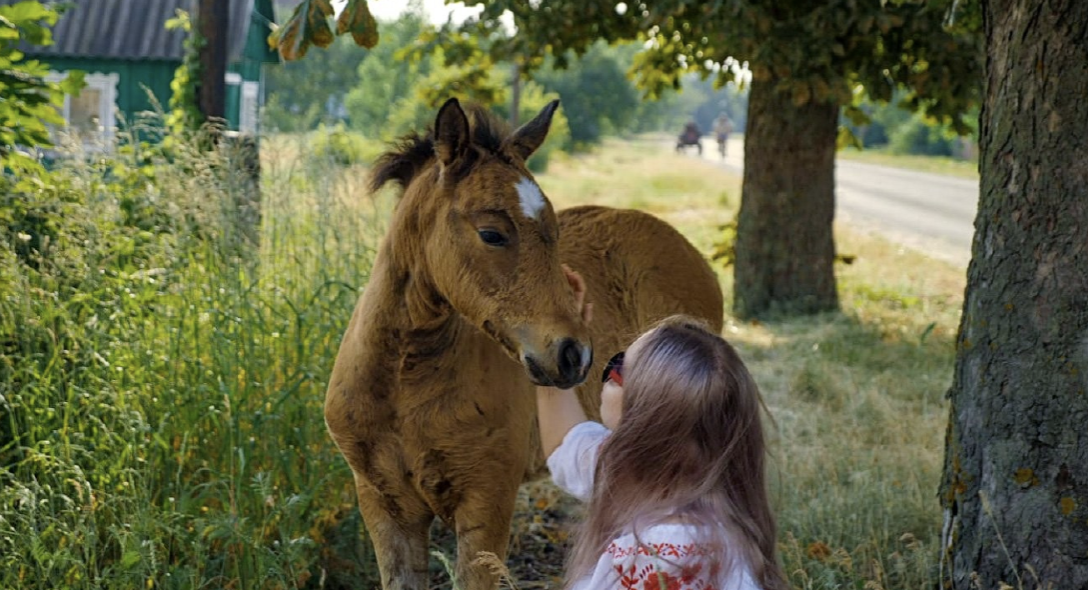
In the past, on the territory of what is known as Brest Polesie, there was yet another horse population — the forest horse, or konik.
Professor V.K. Gladenko mentions this in his book “Horse Breeding in Belarus” (1985), but today the konik is no longer found in Belarus and is considered a Polish breed. The exception are the tarpan-like horses brought several years ago from the Netherlands to Belarus for rewilding in the Naliboki Forest, which are also called konik.
Important distinction: an aboriginal population is a group of horses that formed in a specific territory spontaneously over a long period of time with minimal human influence. A breed, on the other hand, is a group of horses that has been subject to deliberate human selection to fix certain traits and qualities, possessing a genealogical structure and a sufficient number of individuals to sustain those breed characteristics. The Polesian population and the Belarusian draft breed are considered related, and infusions of Polesian horse bloodlines have been permitted into the latter.
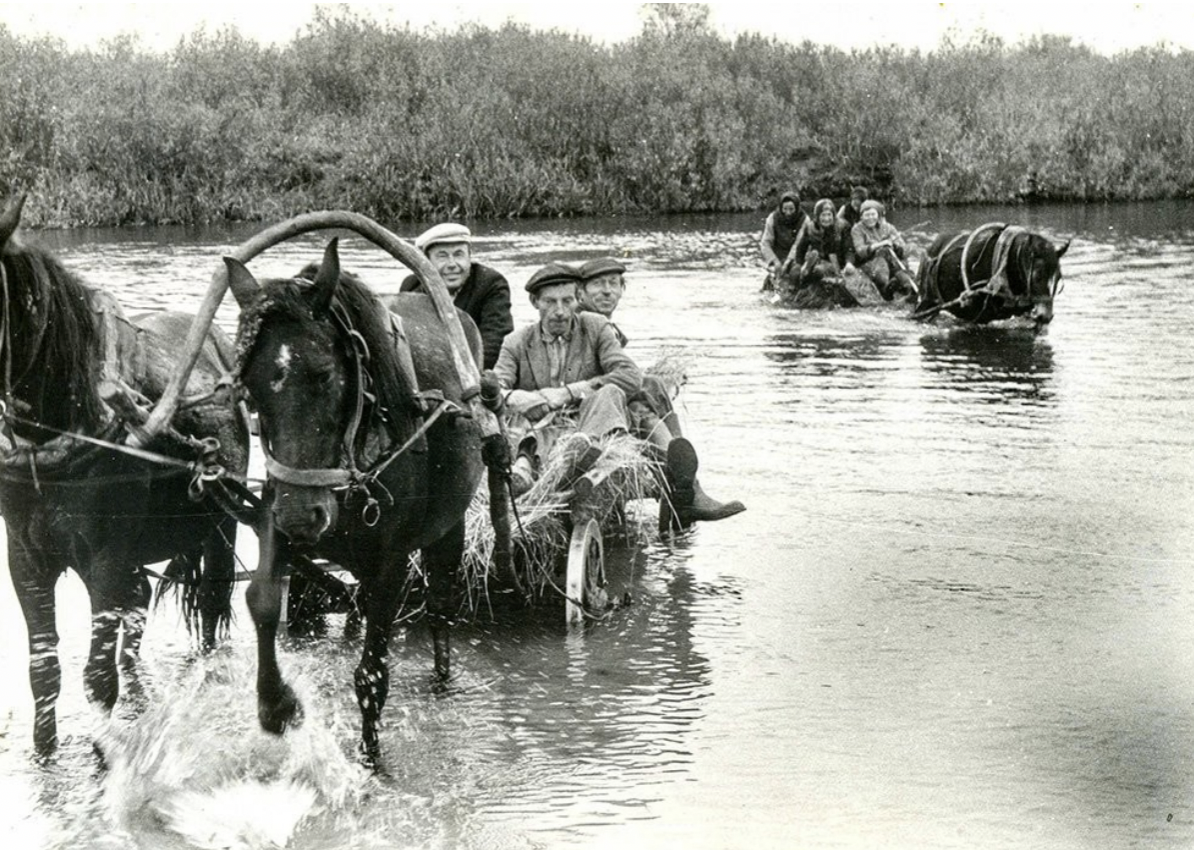
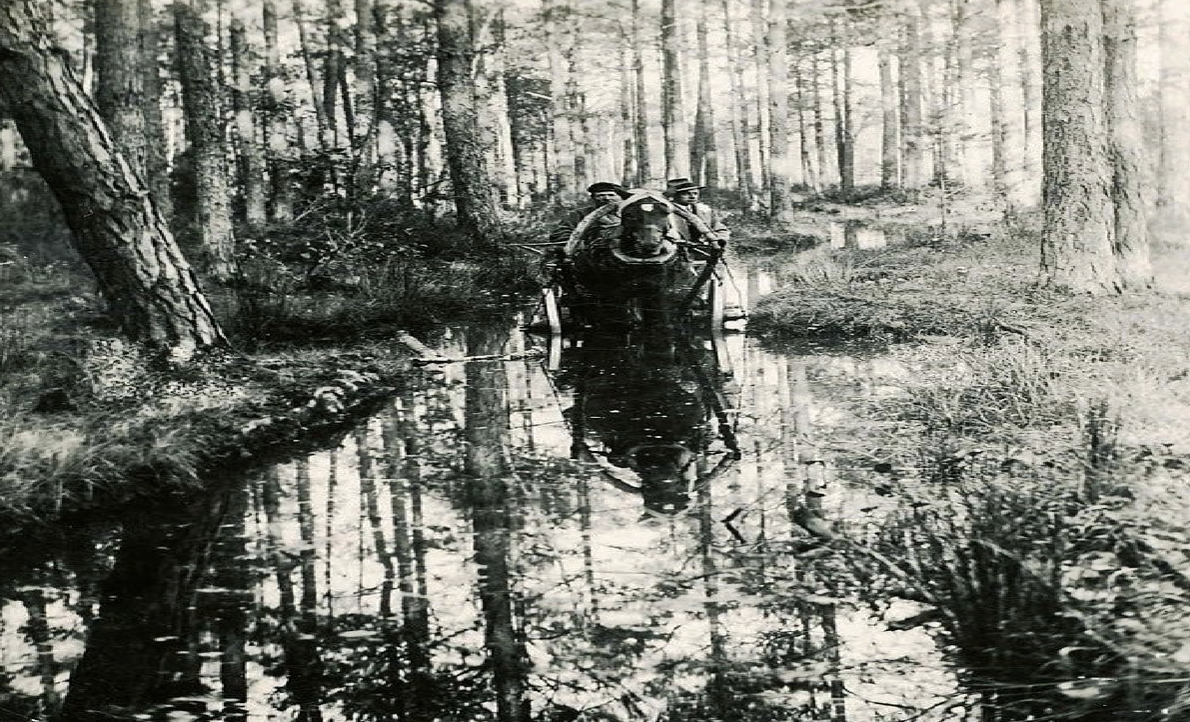
There are two known theories about the origins of the Polesian horse. In V.I. Kalinin’s book “Horse Resources of the USSR” (1939), a hypothesis is presented about their descent from ancient Lithuanian horses (likely referring to what is now the Žemaitukas or Žemaiчю breed) and Mongolian-influenced horses of the Chernigov and Kyiv principalities.
The second theory, proposed by Belarusian scholar V.K. Gladenko, holds that the Polesian horse is descended from forest tarpans, with origins dating back to the 1st millennium CE. These conclusions were drawn in his doctoral dissertation “Evolution of Horses of the Aboriginal Populations of Belarus” (1978), based on an analysis of archaeological, osteological, and craniological data.
 |
 |
 |
The Belarusian draft horse breed was officially registered in Belarus on 25 May 2000, but work on its formation had been carried out in Western Belarus since the end of the 19th century. At that time, local mares were improved by sires of the Gudbrandsdal, Ardennes, Swedish, Hanoverian, and other breeds. By the 1940s, the best multi-breed crossbreeds and improved local animals had been consolidated into a population known at the time as the Oshmyany horses. After the heavy losses suffered during the Second World War, systematic work with the breed was restored by the 1970s.
Numbers and Results
In recent decades, Belarus has seen a strong negative trend in the overall horse population.
|
217k
horses in 1991
|
221k
horses in 2000
|
38k
horses in 2020
|
34k
horses in 2021
|
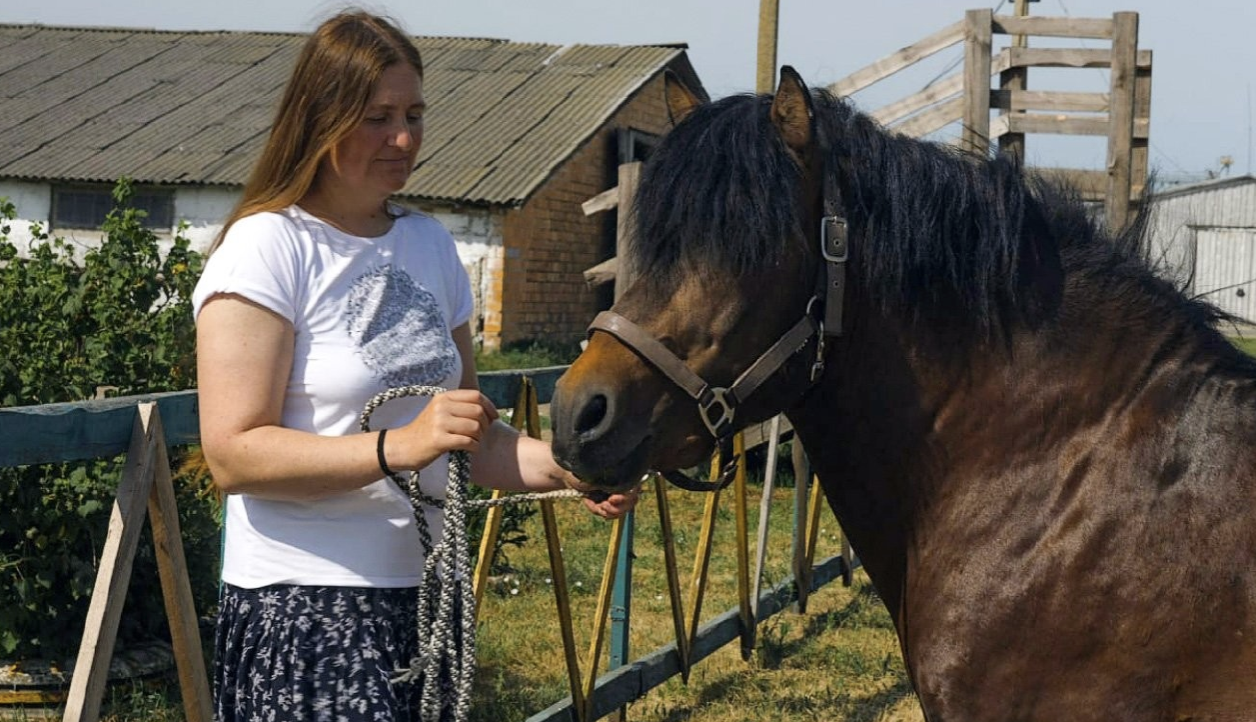
The picture for our local horses is even more grim. At the time of the Belarusian draft breed’s registration in 2000, there were around 3,000 mares alone, but by 2020 only 600 animals were listed in the state studbook of breeding animals, including 227 mares and 31 stallions. The situation is even worse for the Polesian aboriginal population. According to Professor Gladenko, back in the 1990s he recorded 600 typical mares across Polesie, sampled from a herd of 20,000 horses. In 2010 (per a survey by the NPC of the NAS of Belarus on Animal Husbandry), 484 mares were examined, of which only 96 were considered typical. In 2021, just 65 animals were entered in the registry, including 33 mares and 3 stallions.
In fairness, there are certainly more living Polesian horses today than that, but they are scattered among private owners, entirely unregistered — and almost completely absent from breeding programmes due to the near-total lack of stallions. According to FAO classification, both of our horse populations hold critical status and are categorised as endangered. The FAO states that a minimum of 1,000 females and 20 males is required for a population to be safely maintained.
Given the particularly vulnerable situation of the Polesian horse, the initiative group is focusing its efforts in this direction. In 2021, the Institute of Genetics and Cytology of the NAS of Belarus launched a project to study the genetic diversity of the aboriginal horse populations using molecular genetics methods.
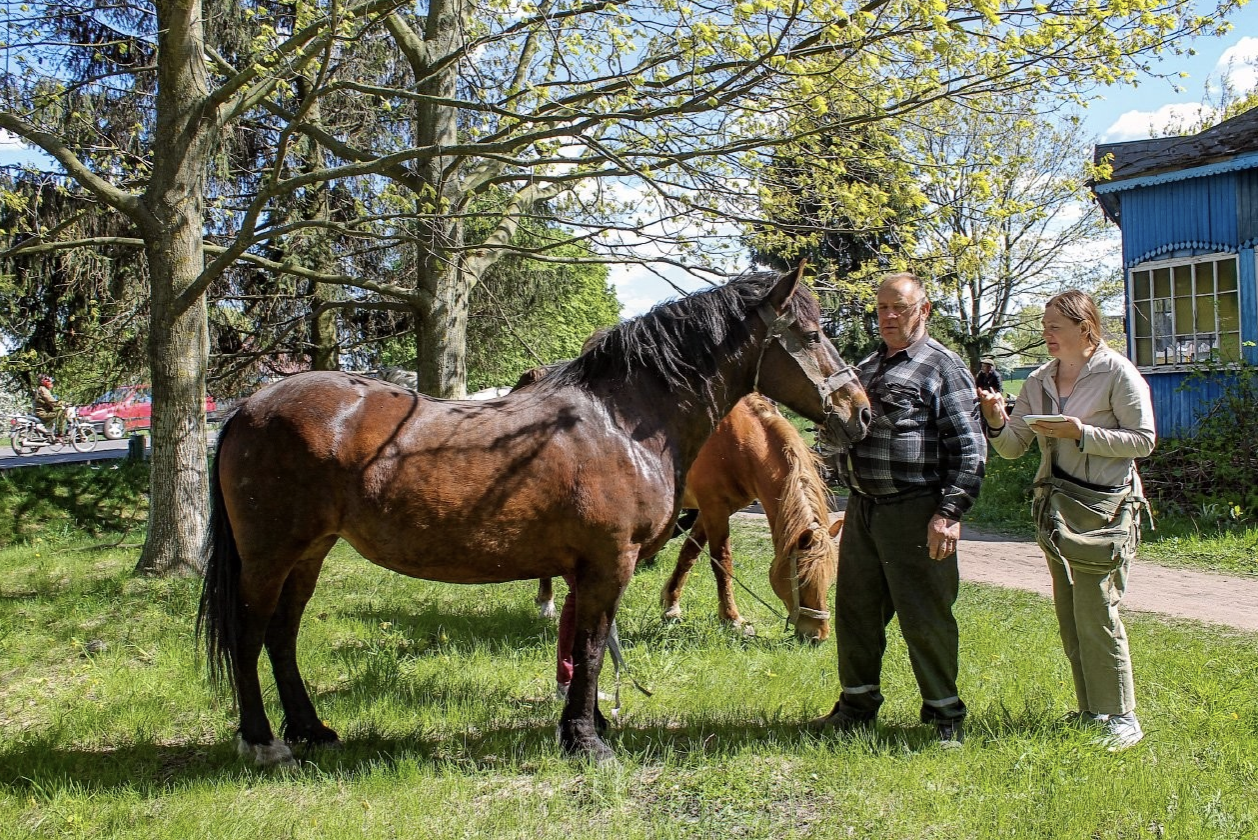
In March 2021, the institute submitted an application to join the European Rewilding Network to promote the idea of using our aboriginal horses for rewilding in Belarus. A series of expeditions to Polesie has been launched to survey horse populations among local residents and collect genetic material samples. At the time of writing, two expeditions have been conducted in the Stolin district and one in the Luninets district. In total, 520 animals have been examined, of which 66 were identified as typical Polesian horses (stallions, mares, and geldings), with the majority being older, elderly, or very elderly animals. Before autumn, three more expeditions are planned to the Stolin, Pinsk, and Mozyr districts, and on 21 or 22 August, at a round table during the V Festival of the Belarusian Horse — held annually by the Polesskaya Niva stud farm — a preliminary analysis of data from all expeditions will be presented. In parallel, work is ongoing on drafting a bonitering (assessment) guide for the Polesian horse, filling thematic groups on social media, creating the initiative group’s website, and filming a documentary whose premiere is planned for the round table. I repeat — all of this is done on a volunteer basis.
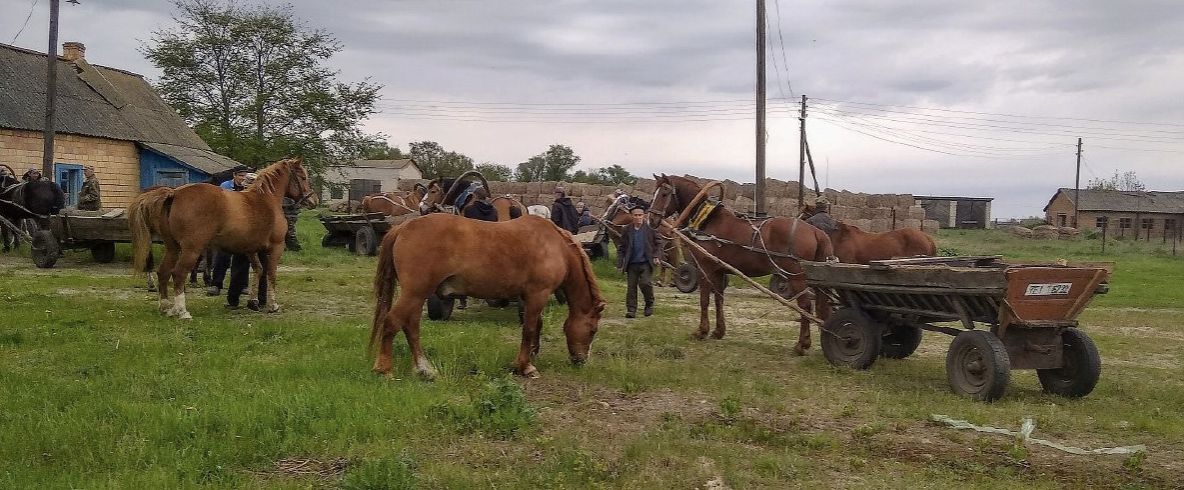
In June 2021, in partnership with the Office of European Expertise and Communication, we held our first informational online event entitled “Everything You Wanted to Know About the Polesian Horse When You Found Out It Existed.” Our initiative group presented the Polesian horse and discussed its work. Fifty people registered from Belarus, Russia, Ukraine, and Estonia; all received the speakers’ presentations, and a recording of the event is available on our social media pages.
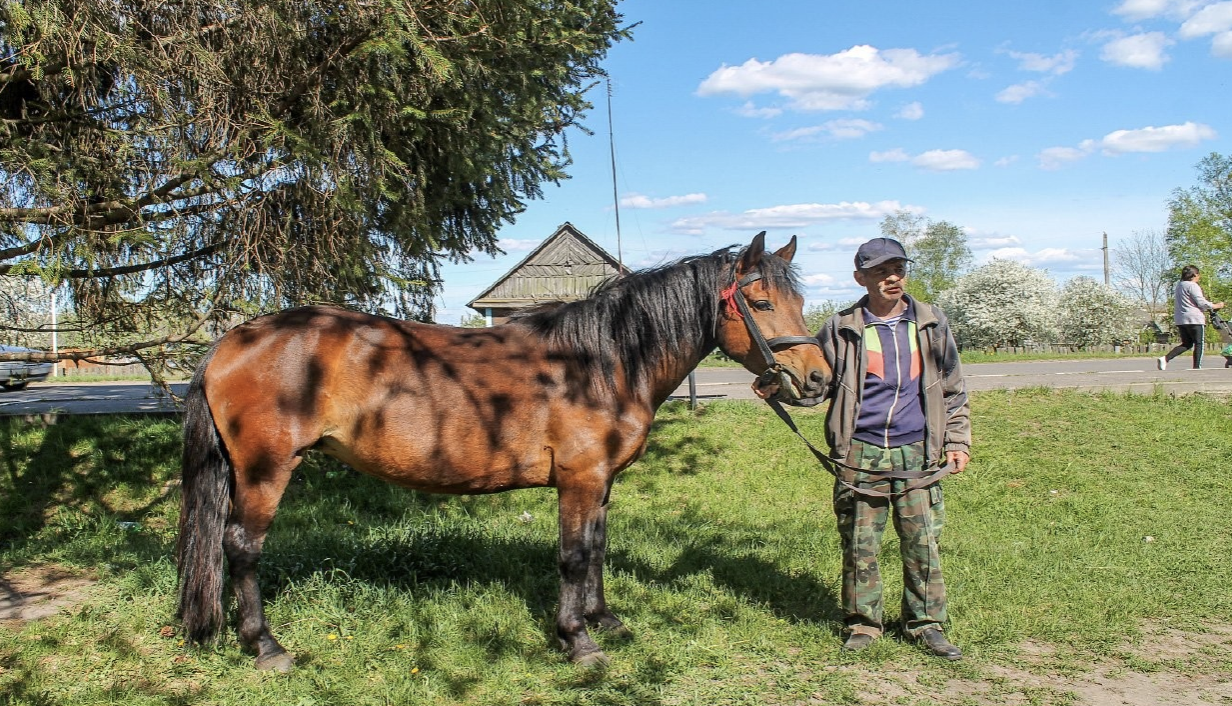
Thanks to an article about the Polesian horse published in 2012, enthusiasts working to preserve the Polesian horse in Ukraine reached out to us. In the Ivankiv district of Kyiv Oblast, an ethnomusicologist-enthusiast has established a farm dedicated to reviving the Ukrainian Polesian horse, “Shcherbati Tsuhly” (15 mares and 1 stallion), working in close collaboration with Ukrainian ethnographers and the Institute of Animal Breeding and Genetics named after M.V. Zubets of the NAAS of Ukraine. The situation with herd numbers there is even worse than here, but from this year the institute has launched a programme titled “Development of a Methodology and Breeding Programme for the Reconstruction of the Polesian Horse Population, 2021–2023.” We maintain close contact with our colleagues; the institute’s researcher and president of the Ukrainian Horse Breeders’ Association, Tetiana Ilnytska, delivered a presentation at our online event.
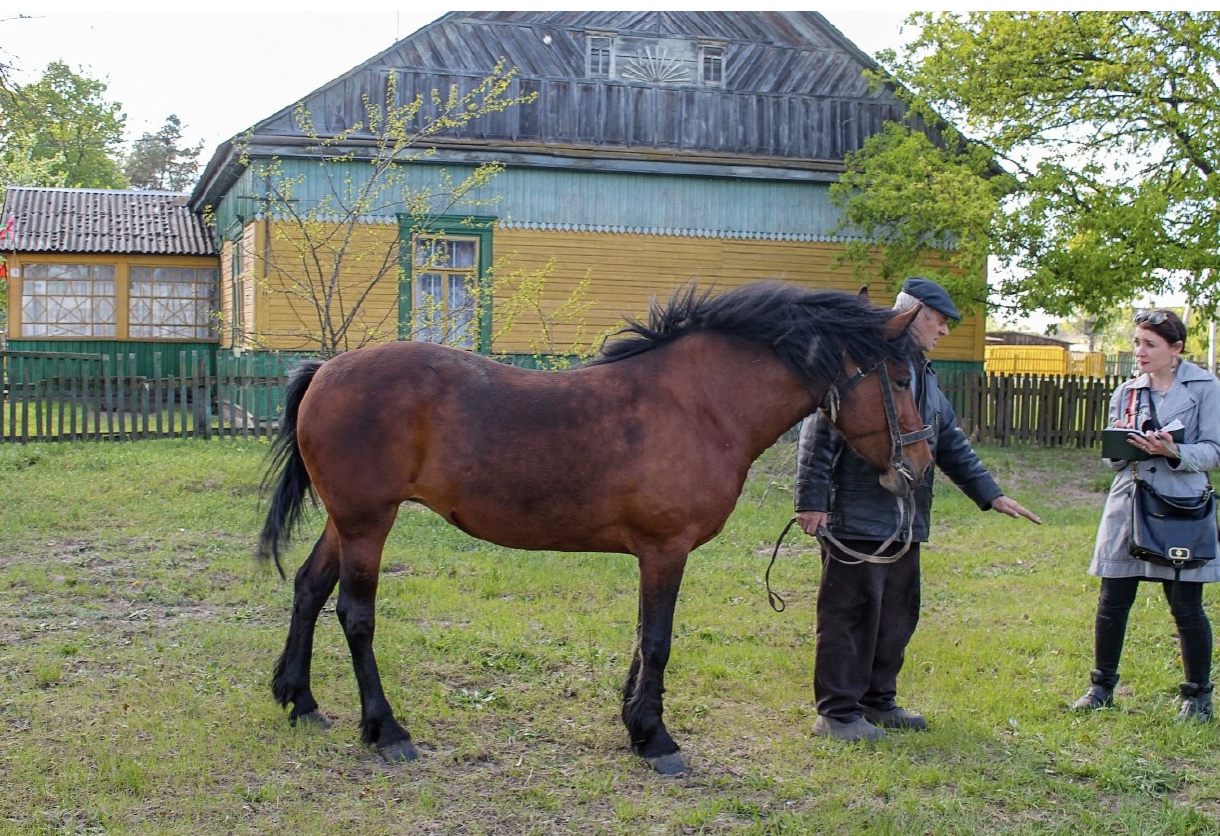
We would like to give particular recognition to those who helped organise the expeditions in the Stolin and Luninets districts: Alexei Nikolaevich Borodich, Director of OJSC “Polesskaya Niva”; Alexander Ivanovich Savina, Head of the Department of Agriculture of the Luninets District Executive Committee; Olga Mikhailovna Zbanchuk, Director of the Breeding Station for the Luninets district; Sergei Arkadyevich Dublyanin, Director of KSUP “Gorodoksky” of the Luninets district.
It should also be noted that there are only two breeding farms for the Polesian horse in Belarus. These are the Polesskaya Niva stud farm in the Stolin district, and KSUP “Gorodoksky” in the Luninets district, which became the successor to the breeding nucleus formed in 2011 at SPK “Nevelsky,” now a branch of the Pinsk Meat Processing Plant. Many thanks to Director S.A. Dublyanin, who in essence saved these horses from being turned into sausage.
There are eight breeding farms certified for the Belarusian draft breed, including 3 stud farms and 1 private farm. In our country, the Polesian aboriginal population is classified as a gene-pool (small-numbered) population, and breeding farms receive state subsidies for the maintenance of their breeding stock.
What Next?
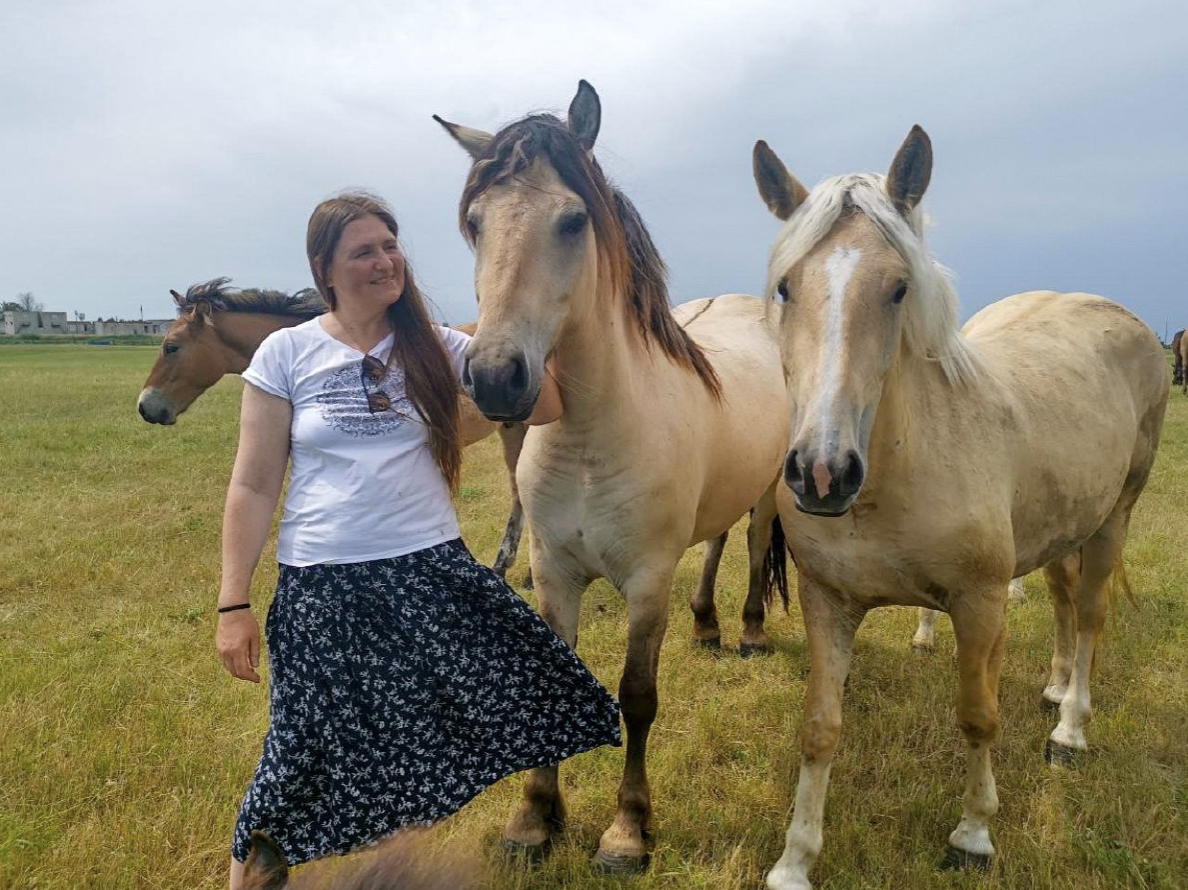
Our initiative group agrees that the immediate priority is to survey at least six more districts of Belarusian Polesie — Mozyr, Pinsk, Drogichin, Zhitkovichi, Kalinkovichi, and Ivanava — in order to gain a more complete picture of the Polesian horse population. All mares under 20 years of age should be registered and purchased as private owners sell them, for which fundraising from various sources must be organised. The purchased mares should be used to form new breeding nuclei, to be placed in new or existing farms with the aim of breeding them, using them in children’s riding programmes and tourism, and creating a “trend” for local breeds.
In parallel, work should be pursued on using Polesian horses to maintain land in an open, non-overgrown state. I am deliberately not using the term “rewilding” here, as these are still domestic horses, and a genuine attempt at releasing them fully into the wild can only happen after 2–3 generations. The Sporovsky Nature Reserve in the Beryoza district of Brest Oblast has already expressed interest in such a long-term experiment with Polesian horses — where they would help restore floodplain meadows and prevent their encroachment by shrubs. In essence, we would be creating a new equestrian operation, but without capital investment in buildings and complex infrastructure, while also minimising human labour in the care of the horses.
We invite all readers to join the discussion — share your thoughts, ideas, and spread this information through your own channels. We especially welcome anyone who cares about the fate of these horses to collaborate with us. Join our groups on social media — VKontakte, Facebook — leave comments and recommend us to your community.
If you would like to do something more, we would be delighted to welcome new activists: we need help with SMM, PR, information dissemination, statistical data collection, and historical research.
And if you feel ready right now to become part of the mission to save our unique horses and can offer direct financial support — please visit our project page on the SaveUs animal welfare platform.
Source: planetabelarus.by · Author: Natalya Shilina · 22.07.2021